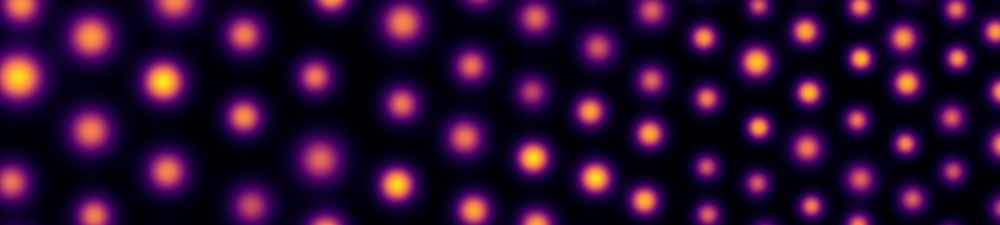
Roll formation in a bio-active fluid
How a suspension of swimming micro-organisms self-organises into convective rolls, modelled as a bio-active fluid. See Bioconvection.
Givaudan M., Picella F., de Maleprade H., Comptes Rendus. Physique (2026). doi
 Francesco PicellaFluid mechanics · Institut ∂'Alembert, Sorbonne Université
Peer-reviewed articles, newest first. Full list on Google Scholar, open-access versions on HAL, ORCID 0000-0003-0630-1528.
How a suspension of swimming micro-organisms self-organises into convective rolls, modelled as a bio-active fluid. See Bioconvection.
Givaudan M., Picella F., de Maleprade H., Comptes Rendus. Physique (2026). doi
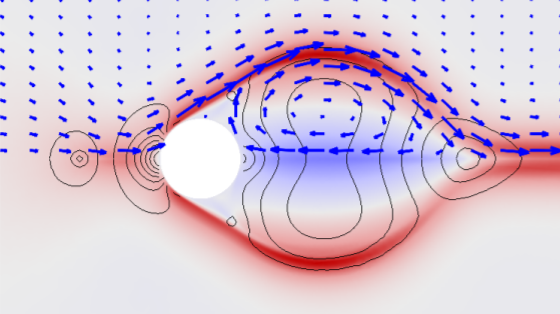
Coupled electro-hydrodynamic simulations of the ionic wind produced by a positive corona discharge. See Stability of coupled flows.
Picella F., Fabre D., Plouraboué F., AIAA Journal (2024). doi
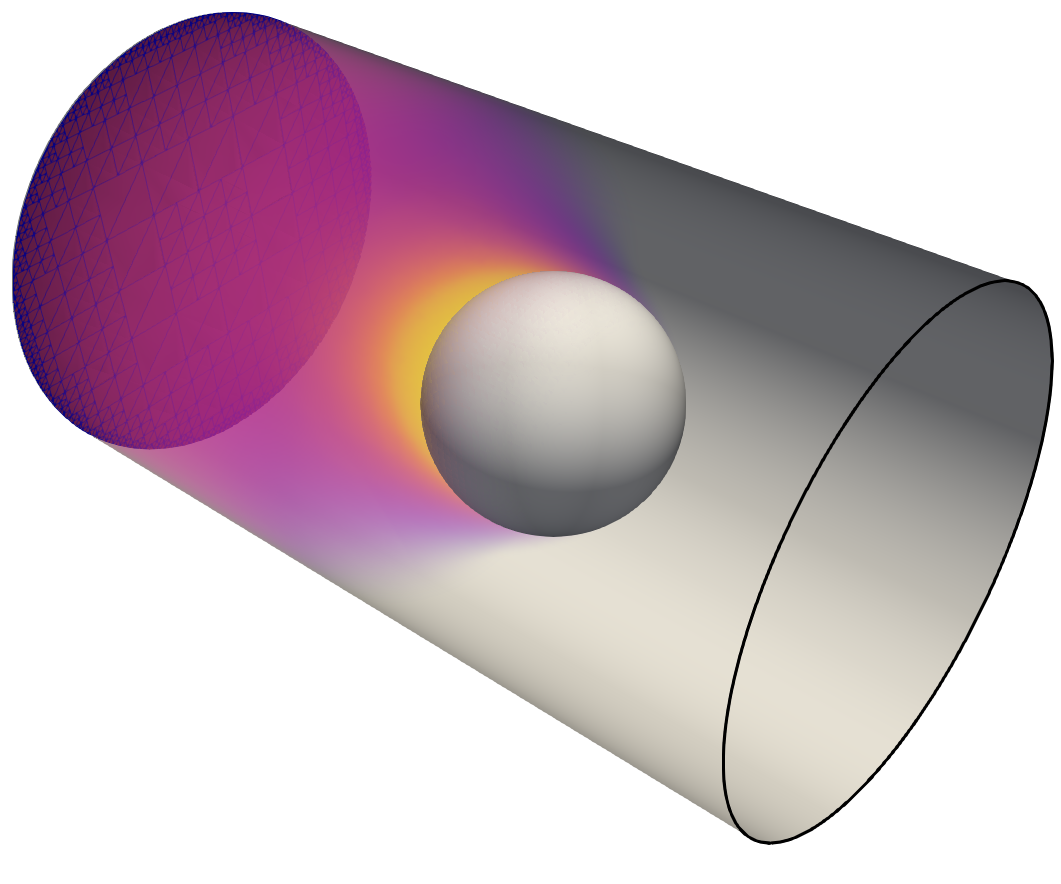
A uniformly active particle that cannot swim in free space starts to self-propel when confined: confinement, not particle asymmetry, breaks the symmetry. See Artificial active matter.
Picella F., Michelin S., Journal of Fluid Mechanics 933, A27 (2022). doi
Nonlinear optimal perturbations in a channel with slippery walls, computed with a variational (adjoint) approach.
Cherubini S., Picella F., Robinet J.-Ch., Mathematics 9(1), 53 (2021). doi
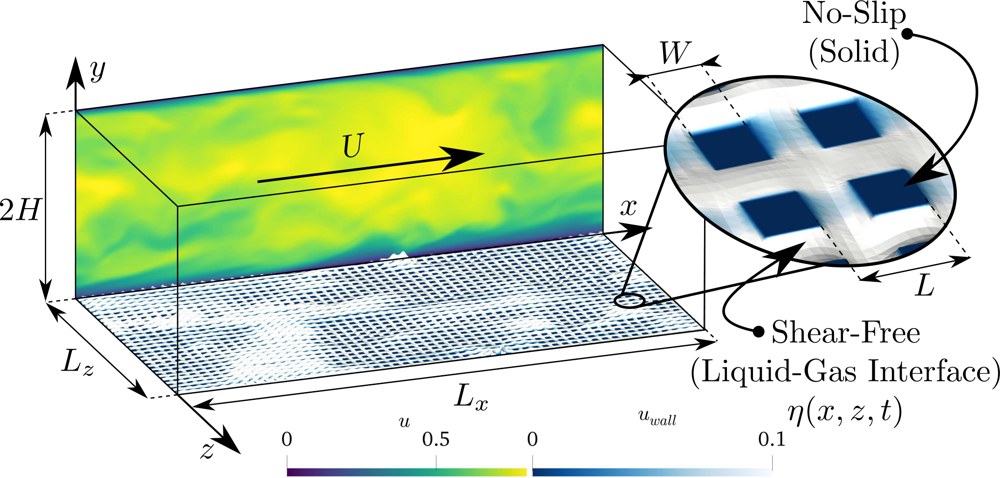
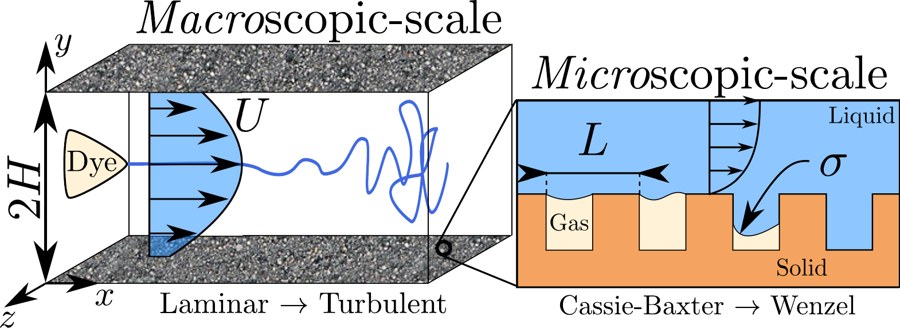
Whether the surface is modelled as a homogeneous slip wall or as a textured, heterogeneous one changes the transition scenario. See Underwater superhydrophobic surfaces.
Picella F., Robinet J.-Ch., Cherubini S., Journal of Fluid Mechanics 901, A15 (2020). doi
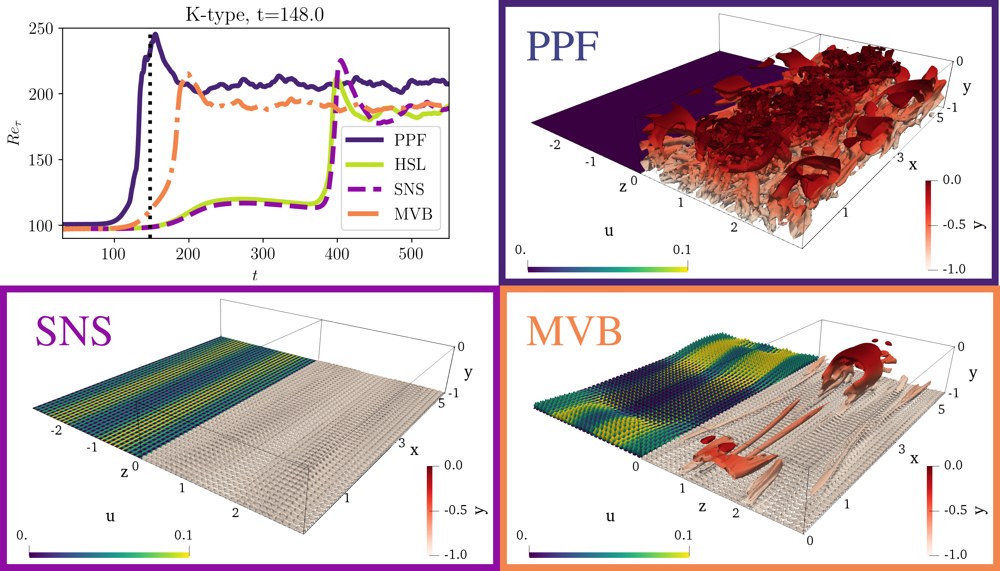
Slip delays transition, but by how much depends on the path the flow takes to turbulence.
Picella F., Robinet J.-Ch., Cherubini S., Journal of Fluid Mechanics 881, 462–497 (2019). doi
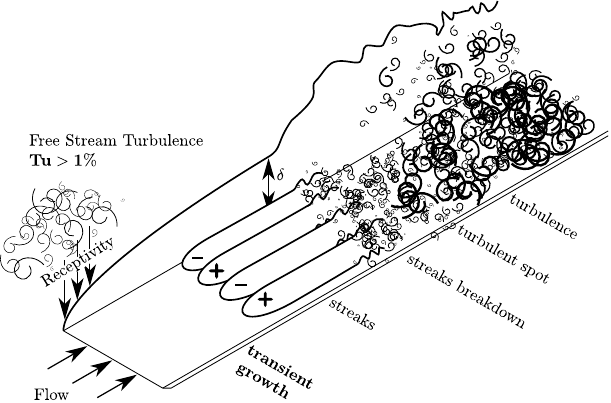
A numerical method that mimics receptivity to free-stream disturbances with a synthetic forcing, to trigger transition in a controlled way.
Picella F., Bucci M. A., Cherubini S., Robinet J.-Ch., Journal of Computational Physics 393, 92–116 (2019). doi
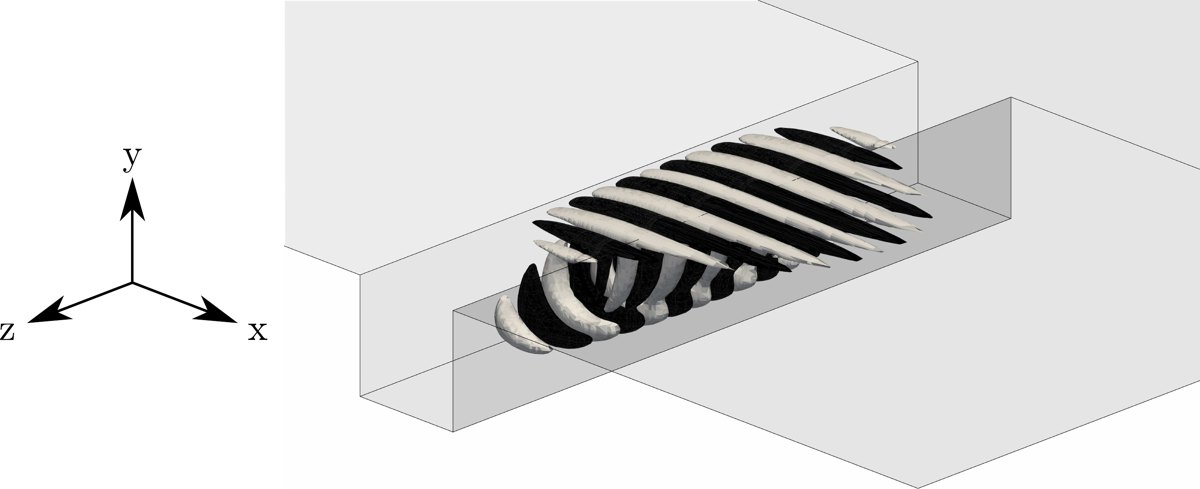
The sequence of bifurcations of a 3D open cavity flow, from global stability analysis and simulations, compared with experiments. See Stability of coupled flows.
Picella F., Loiseau J.-Ch., Lusseyran F., Robinet J.-Ch., Cherubini S., Pastur L. R., Journal of Fluid Mechanics 844, 855–877 (2018). doi